-
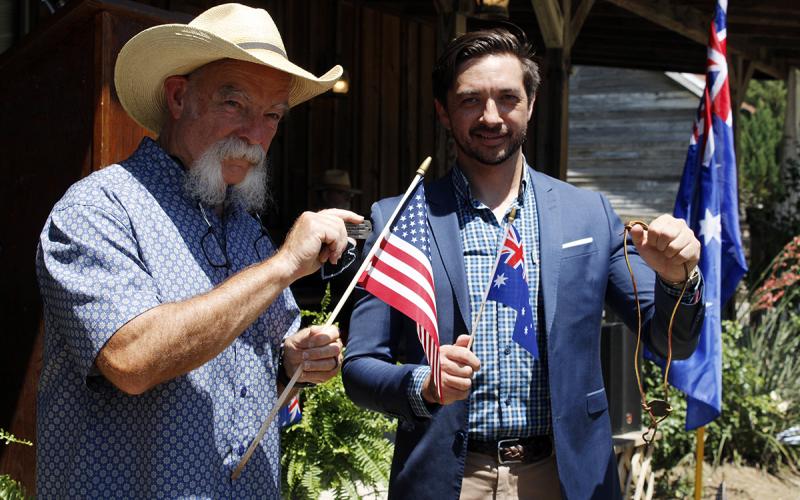 Garth Oliver, nephew of Lost Battalion veteran Pvt. Garth Oliver, and Capt. Aaron McCready, grandson of Cpl. Mervyn McCready, stand together Wednesday, June 10 after Oliver’s dog tags are returned home after more than 80 years in Australia. The two soldiers exchanged dog tags at the end of World War II after being liberated from a Japanese prison camp as a symbol of everlasting brotherhood. Photo/Ashley Anderson
 -
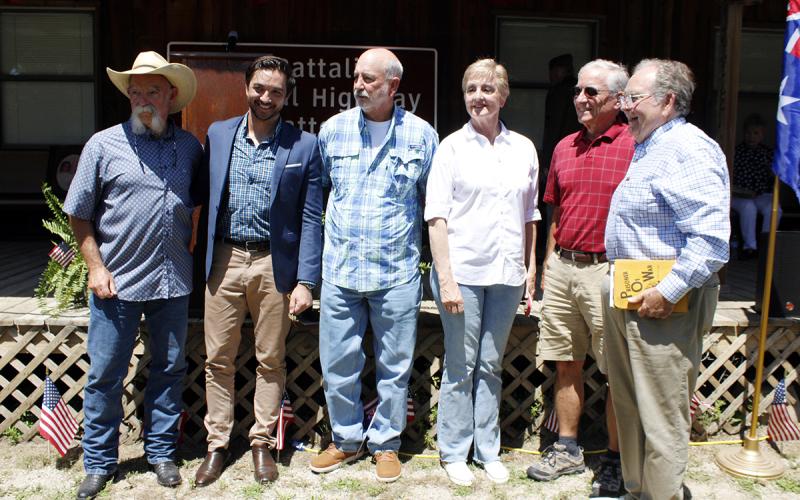 The Oliver family stands with Capt. Aaron McCready as the two families come together to honor the bond of brotherhood built across two nations. McCready returned dog tags to the Oliver family after spending more than 80 years in Australia after the end of World War II. Photo/Ashley Anderson
 -
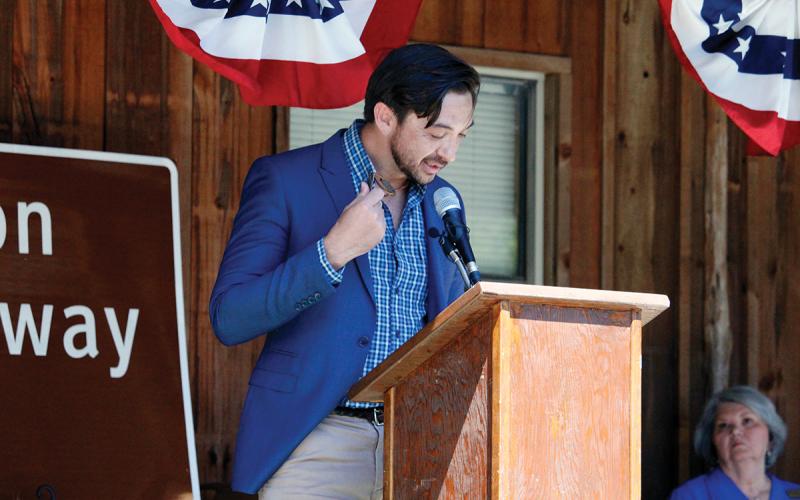 Capt. Aaron McCready holds the dog tags around his neck belonging to his grandfather, Cpl. Mervyn McCready. McCready and Pvt. Garth Oliver exchanged dog tags at the end of World War II after spending more than three years together as prisoners of war. Photo/Ashley Anderson
 -
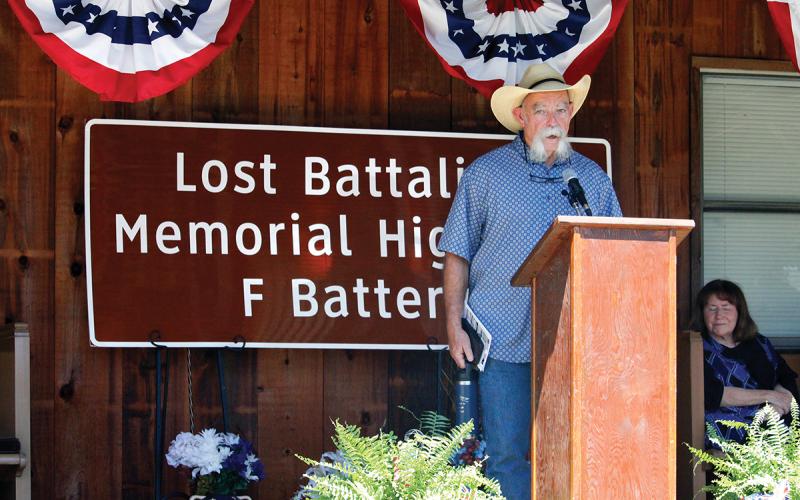 Garth Oliver, nephew Lost Battalion veteran Pvt. Garth Oliver, speaks fondly of his uncle Wednesday, June 10 at the Jack County Museum. Oliver’s dog tags were returned to the family after spending more than 80 years with friends in Australia. Photo/Ashley Anderson
 -
 Garth Oliver, nephew Lost Battalion veteran Pvt. Garth Oliver, is emotional while speaking of his uncle Wednesday, June 10 at the Jack County Museum. Oliver’s dog tags were returned to the family after spending more than 80 years with friends in Australia. Photo/Ashley Anderson
 -
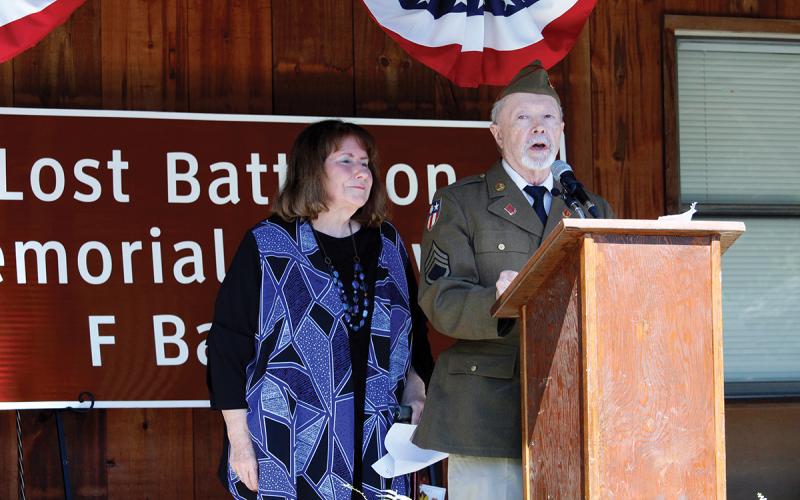 Michael Bialas, son-in-law of Lost Battalion veteran Luther Prunty, wears Prunty’s service uniform as he tells the history of Jack County’s Lost Battalion at the Jack County Museum. Pictured with Bialas is his wife, Gail Prunty Bialas. Photo/Ashley Anderson
 -
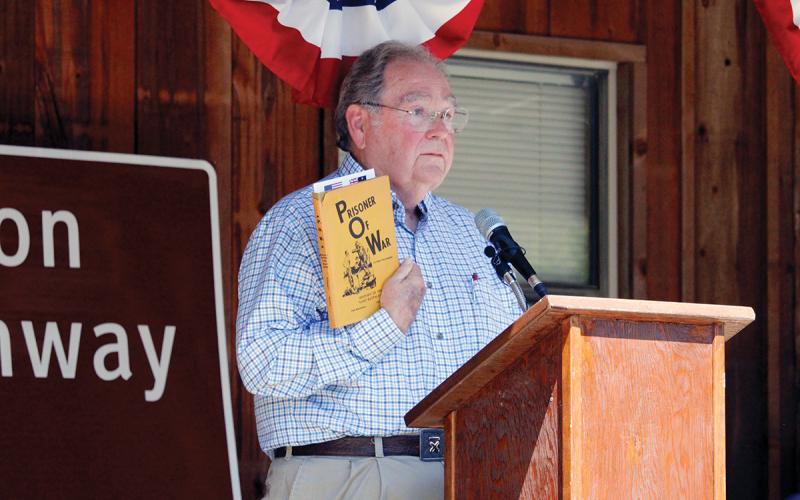 Nelson Oliver, nephew of Lost Battalion veteran Pvt. Garth Oliver, speaks about his uncle Wednesday, June 10 at the Jack County Museum during a ceremony to honor the brotherhood between Oliver and an Australian soldier during World War II. Photo/Ashley Anderson
 -
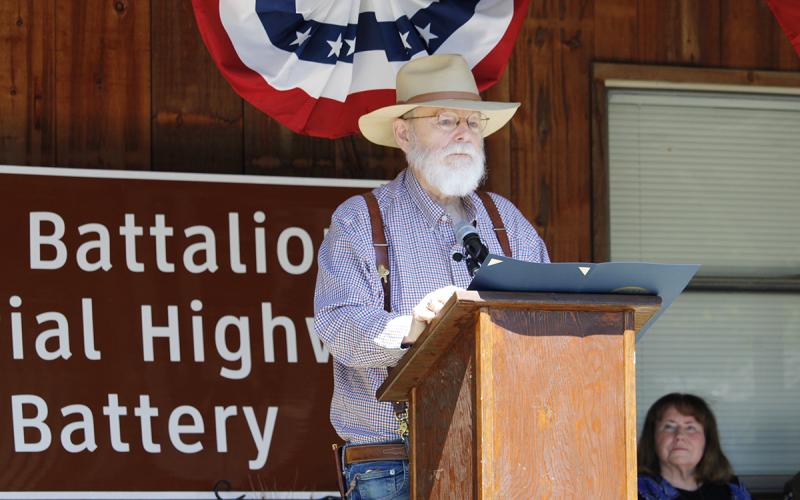 Jack County Judge Emeritus and Jack County Museum Vice President Mitchell Davenport delivers a proclamation declaring Wednesday, June 10, 2026 as Lost Battalion Brotherhood Day in Jack County, encouraging all citizens to reflect on the courage and sacrifice of those who served in World War II. Photo/Ashley Anderson
After more than 80 years overseas, a piece of history comes home to Jack County during a once-in-a-lifetime celebration of the bond between two soldiers, two families and two nations.
The family of Cpl. Mervyn McCready made the trip from Australia to return dog tags to the family of Jack County’s Pvt. Garth Oliver on Wednesday, June 10 at the Jack County Museum.
Just a few months ago, Capt. Aaron McCready, grandson of Cpl. McCready, asked the Texas Military Department and Texas Military Forces Museum at Camp Mabry in Austin to help him return a piece of property to its rightful owners.
McCready said while preparing for war in the Pacific Theater after Japan’s entry into World War II, his grandfather’s unit was diverted from Singapore to Java as a blocking force.
On March 3-5, 1942, during the Battle of Leuwiliang, Australian forces supported by American artillery batteries from west Texas, along with British light tanks, launched a holding action in west Java to cover the retreat of Dutch forces.
It was during this delay action that Cpl. McCready met Oliver, and although the operation was successful, Allied forces were overrun and forced to surrender the island to the Japanese.
The two soldiers were among more than 32,000 men taken prisoner.
Spending a total of three and a half years in captivity, the soldiers were subjected to harsh conditions, starvation and systematic torture.
Because of the brutal treatment, POWs used the buddy system to keep each other alive by sharing rations and caring for one another when sick or injured.
“Mates were central for survival,” Capt. McCready said. “I’m sure Garth had to live and work off many a day on half a handful of rice for Mervyn. And I’m sure Mervyn returned the favor…they were mates.”
The POW camp was discovered by the U.S. Army Air Force in September 1945 and freed by U.S. ground forces shortly after.
“As the famous story goes, having just survived with nothing but their lives and their dog tags and now parting ways, they exchanged them,” Capt. McCready said. “Mervyn gave Garth his bottom dog tag, his living tag, as a token of their mateship — symbolic of ‘I owe you my life.’”
Cpl. McCready died on Dec. 12, 1956, just 11 years after the end of the war. And though he was never able to return the dog tags to his comrade and friend, his family made sure the story would live on through his grandchildren.
Capt. McCready wore the dog tags around his neck — along with his own.
“I’ve worn them as a token of good luck and most of all, mateship,” Capt. McCready said.
The dog tags were returned to the Oliver family, fulfilling a promise borne in the shadow of war and preserving a legacy of remembrance for future generations.
Jack County Judge Emeritus and Jack County Museum Board Vice President Mitchell Davenport read a proclamation of the county honoring the bond between the two soldiers and declaring June 10, 2026, as Lost Battalion Brotherhood Day in Jack County, encouraging all citizens to reflect on the courage and sacrifice of those who served in World War II.
“It’s always amazing to me when you hear stories like this to find that in this darkness, these men were able to find inspiration to live their daily lives — to live for themselves, each other and for us,” Davenport said.
The Lost Battalion
After experiencing the financial devastation of the Great Depression, the 2nd Battalion, 131st Field Artillery regiment was assigned to 36th Division of Texas National Guard and was mobilized Nov. 25, 1940, providing an opportunity for young men in Jack County to make extra money for their families.
A total of 63 local men between the ages of 18 and 22 were assigned to Battery F and stationed at Fort Richardson for training. The battery left by train in November 1941, bound for San Francisco and then Hawaii to deliver supplies and ammunition to Pearl Harbor.
After departing Pearl Harbor, the soldiers were headed toward the Philippine Islands when they received word on Dec. 7, 1941, that Japan had attacked Pearl Harbor, officially drawing the U.S. into World War II.
The ship was rerouted to Brisbane in Queensland, Australia where they spent about a week for Christmas before sailing on a Dutch freighter to the island of Java on Jan. 11, 1942, with 558 men.
The 2nd Battalion was the only U.S. ground force to arrive in the Dutch East Indies, sent to defend the Dutch from a possible Japanese invasion. The Texas men distinguished themselves, supporting Australia and fighting alongside the Dutch to earn a Presidential Unit Citation.
On March 8, 1942, the Allies in the Dutch East Indies surrendered to the Japanese and all troops became prisoners of war, including the men from Jack County.
After about seven months in captivity on the island, the men were moved in October 1942 by Japanese freighter to Singapore before being moved again to Burma in January 1943.
Michael Bialas, son-in-law of Lost Battalion veteran Luther Prunty, said for the next two years soldiers were forced to work up to 20 hours a day with little food and no medical care to build the Burma Railway, also known as the Death Railway.
It was almost a year later before the U.S. learned the fate of the soldiers.
“It was assumed that the unit was entirely lost, and most of the men were designated as missing in action when the Japanese military forces invaded the island of Java,” Bialas said. “That is when they became known as the Lost Battalion.”
When work on the railroad was finished, the POWs were moved to different parts of Asia and conditions improved, but many were killed or wounded during bombings towards the end of the war. The war and imprisonment ended when the U.S. dropped two atomic bombs on Japan in August 1945.
The soldiers from Jack County attributed their survival to their agricultural upbringing during the Great Depression, which required hard work, strength and stamina. The 131st Field Artillery unit is the most decorated military unit in Texas.
“For 63 men from Jack County who suffered these atrocities, including seven sets of brothers, they developed a bond and loyalty to each other — often risking their own life and safety to help and protect a fellow soldier,” Bialas said.
Carrying a Legacy
After the war, the survivors formed the Lost Battalion Association which is still in existence today. The men and their families would come together for a three-day reunion full of stories, music and dancing.
Lost Battalion Association President Terry Ogle Shields, daughter of Lost Battalion veteran Ray “Snake” Ogle, said growing up, the children weren’t always allowed at the reunions. But as the men continued to age, the next generation started to help with the event.
“They finally, reluctantly said, ‘As long as you keep the reunions and do everything we have been doing, we’ll let y’all try it,’” Shields said. “So we had some of the next generation join them in their meetings and after they had confidence in us that we could continue on, they let us take it over completely.”
The last survivor passed away in 2025 but some widows are still living. The families of the soldiers continue to reunite for two days every year to share stories and keep their legacy alive.
“We will also continue getting together as a group, whether it be larger or small, after the last widow has left this earth. We as the brothers and sisters want to continue the story of our fathers, our uncles,” Shields said. “If we don’t continue that story and share it with everybody, that story is going to die. And it can’t die because of what they sacrificed and gave for us to live in this free country today.”
- Log in to post comments